As an optometrist who has been fitting ortho-k lenses here in Fayetteville for over two decades, I’ve seen a dramatic shift in children’s vision. It feels like every week, more and more parents are coming into my office, worried about their child’s worsening eyesight. They’re not just imagining it. The truth is, we’re in the middle of a global myopia boom, and our modern lifestyles are fanning the flames. I’ve had conversations with parents from all over Cumberland County, from the military families at Fort Liberty to the folks in Hope Mills, and the story is often the same: their kids are spending more time on screens than ever before, and their prescriptions are getting stronger every year.
It’s a concern that hits close to home for me, not just as a doctor, but as a member of this community. I’ve seen the worry in your eyes, and I want you to know that you’re not alone and, more importantly, that there are effective strategies to protect your child’s vision. This isn’t about demonizing technology; it’s about understanding the risks and learning how to manage them. Let’s talk about what’s really happening with our kids’ eyes and what we can do about it.
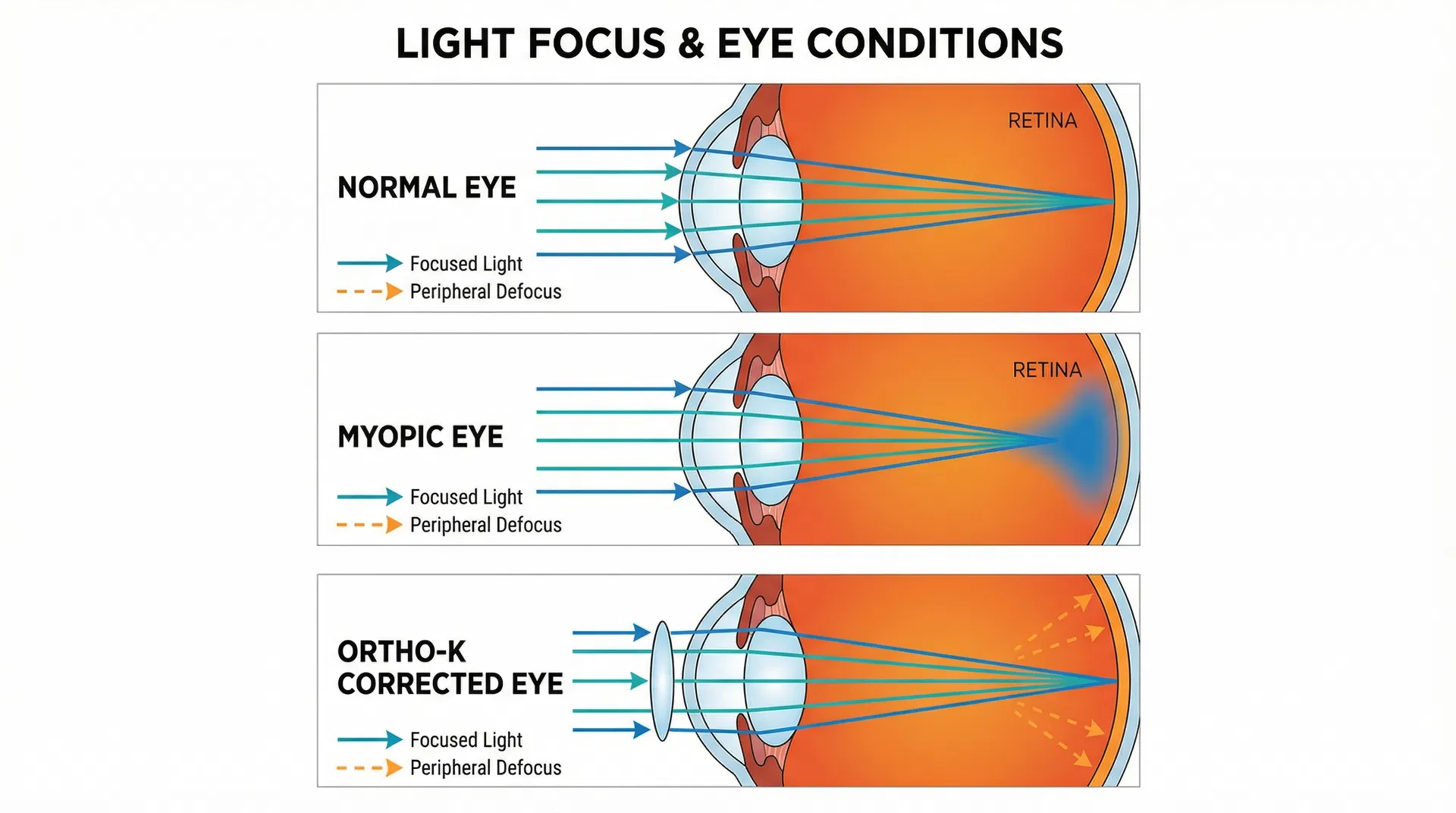
Myopia, or nearsightedness, is more than just blurry distance vision. It’s a condition where the eyeball elongates, causing light to focus in front of the retina instead of directly on it. While glasses and regular contacts can correct the blur, they don’t stop the eyeball from continuing to grow. This progression is the real danger, as it increases the risk of serious, sight-threatening conditions later in life, like retinal detachment, glaucoma, and myopic maculopathy. The World Health Organization has called it a global health crisis for a reason.
So, what’s behind this surge? While genetics certainly play a role, our environment is a powerful driver. The COVID-19 era was a perfect storm. Kids across Fayetteville and the country were suddenly thrust into online learning, spending hours staring at screens for both school and play. A study published by the American Academy of Ophthalmology (AAO) confirmed what many of us suspected: myopia prevalence and progression shot up significantly during the pandemic. It’s a trend that hasn’t slowed down.
Our lives are dominated by “near work”—any activity done at a close distance, like reading a book, drawing, or, most commonly, using a phone or tablet. The problem is that our eyes weren’t designed for hours of sustained close focus. When a child spends too much time in this near-work zone, it can signal the eye to grow longer, leading to myopia. It’s a quiet, gradual process that many parents don’t notice until their child starts squinting to see the board at school.
A Closer Look: How Screens and Near Work Affect Young Eyes
Have you ever noticed your child holding a phone just inches from their face, completely absorbed in a game? That intense, close-up focus is at the heart of the problem. Children’s visual systems are still developing, making them more susceptible to the strain of near work. They have a more powerful focusing ability than adults, which allows them to hold things closer for longer without immediate discomfort, but it comes at a cost.
This sustained effort can lead to something called accommodative spasm, where the eye’s focusing muscles have trouble relaxing. Think of it like a muscle cramp in your eye. This can cause headaches, eye strain, and, over time, contribute to the elongation of the eye. Research from the National Institutes of Health (NIH) has shown a clear link between the duration and proximity of near work and the risk of developing myopia.
Here’s a simple breakdown of screen time guidelines by age, though it’s important to remember that the quality and context of screen time matter just as much as the quantity.
| Age Group | Recommended Screen Time (American Academy of Pediatrics) |
|---|---|
| Under 18-24 months | Avoid solo screen use; video-chatting with family is okay. |
| 2 to 5 years | Limit to 1 hour per day of high-quality programming, co-viewed with a parent. |
| 6 and older | Place consistent limits on time spent and types of media. |
It’s not just about the time, but also the distance. The chart below illustrates how the risk of myopia increases as the working distance decreases. Holding a device at 10 inches poses a much greater risk than reading a book at 16 inches.
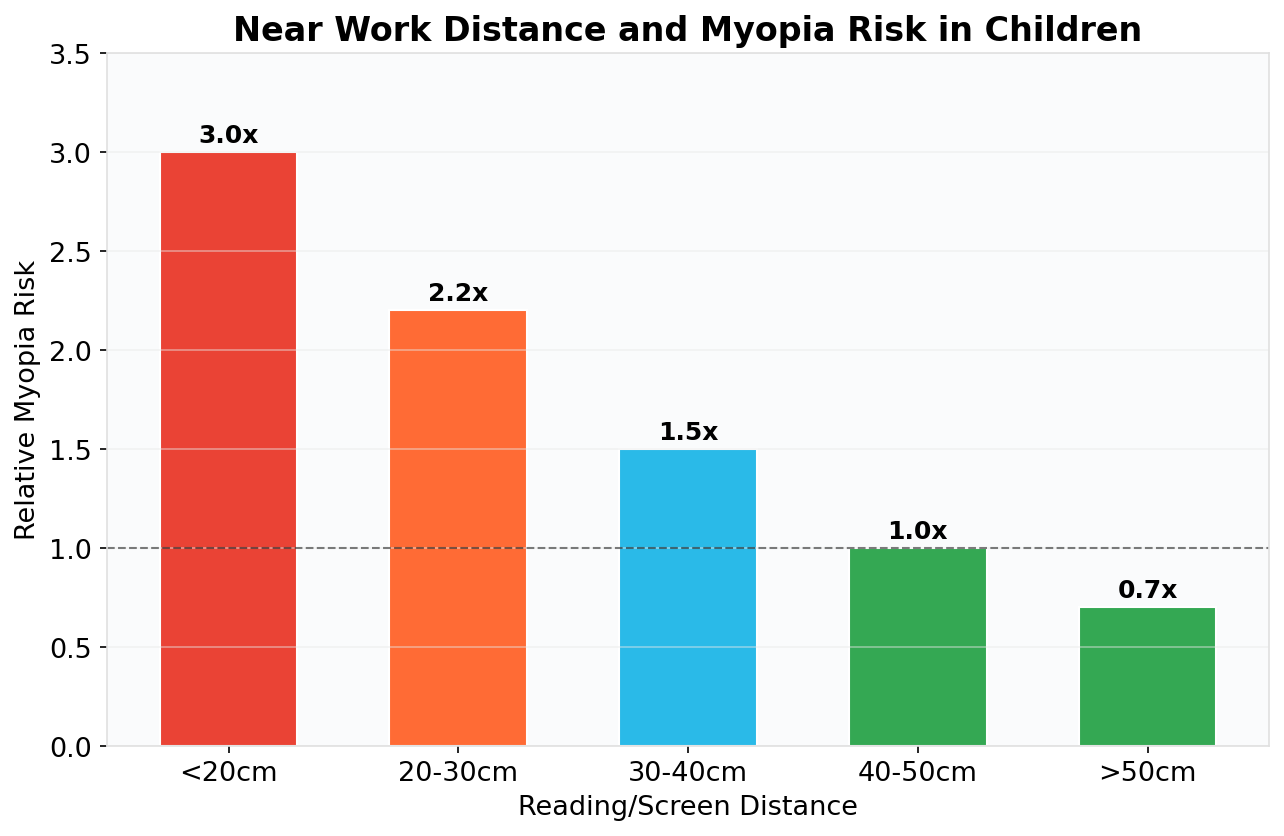
This chart shows a clear trend: the closer a child holds their device, the higher the risk of myopia. Keeping devices at least 16-20 inches away can make a significant difference.
The 20-20-20 Rule: Your First Line of Defense
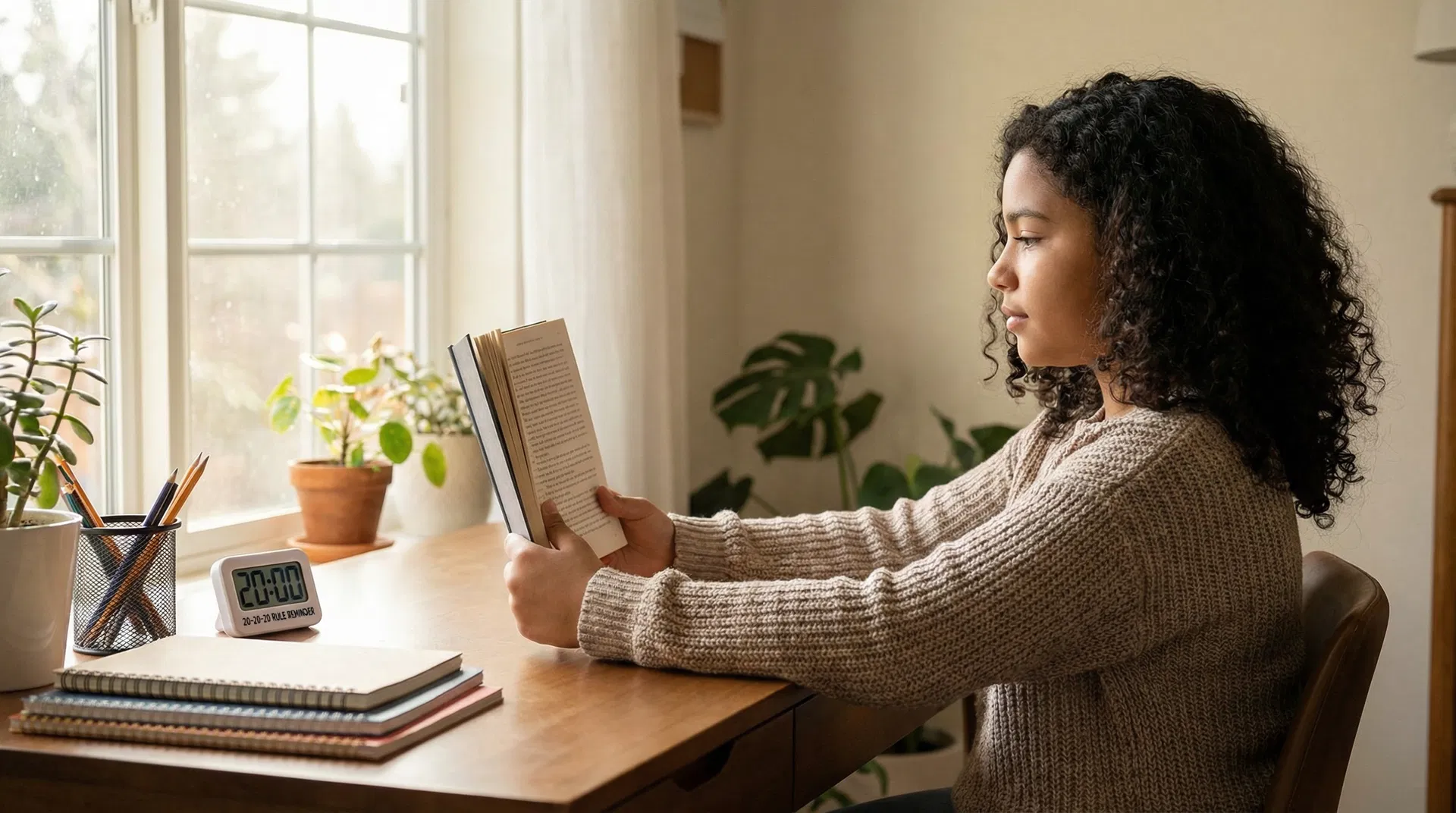
If I could give parents one simple, memorable tool, it would be the 20-20-20 rule. It’s easy to teach, easy to implement, and incredibly effective at reducing digital eye strain. Here’s how it works:
For every 20 minutes of near work, have your child take a 20-second break to look at something 20 feet away.
That’s it. This simple act allows the focusing muscles in the eyes to relax, reducing the strain that contributes to myopia progression. Set a timer on their device or use a smart speaker to give them reminders. Make it a family habit. When you’re working on your laptop, you take a break, too. Look out the window, down the street, at a tree in the distance. It’s a small change that can have a huge impact on your family’s eye health.
Beyond the 20-20-20: Practical Tips for Cumberland County Families
Living in Cumberland County, we’re blessed with beautiful parks and outdoor spaces. Let’s use them! Here are some practical, local tips to balance screen time with healthy habits:
- Get Outside: Research has consistently shown that spending time outdoors, specifically about two hours a day, is protective against myopia. Instead of another hour on the tablet, why not take a family walk at the Cape Fear River Trail or have a picnic at Mazarick Park? The natural light and distance viewing are exactly what young eyes need.
- Optimize the Homework Zone: Create an eye-friendly study space. Ensure good lighting to reduce glare and encourage your child to keep a proper reading distance—about the distance from their elbow to their knuckles. A bookstand can be a great tool for this.
- Lead by Example: Kids model our behavior. If we’re constantly glued to our phones, they will be too. Designate screen-free times, like during dinner or the hour before bed. Let them see you picking up a book or heading outside instead of scrolling.
- Explore Local Activities: From sports leagues to the arts programs at the Gilbert Theater, Fayetteville offers plenty of engaging, screen-free activities for kids. Check out the resources at your local community center or library.

Trading screen time for green time is one of the most effective ways to protect your child's vision. Our local parks in Cumberland County are the perfect place to start.
A Powerful Combination: Lifestyle Changes and sleepSEE® Ortho-K
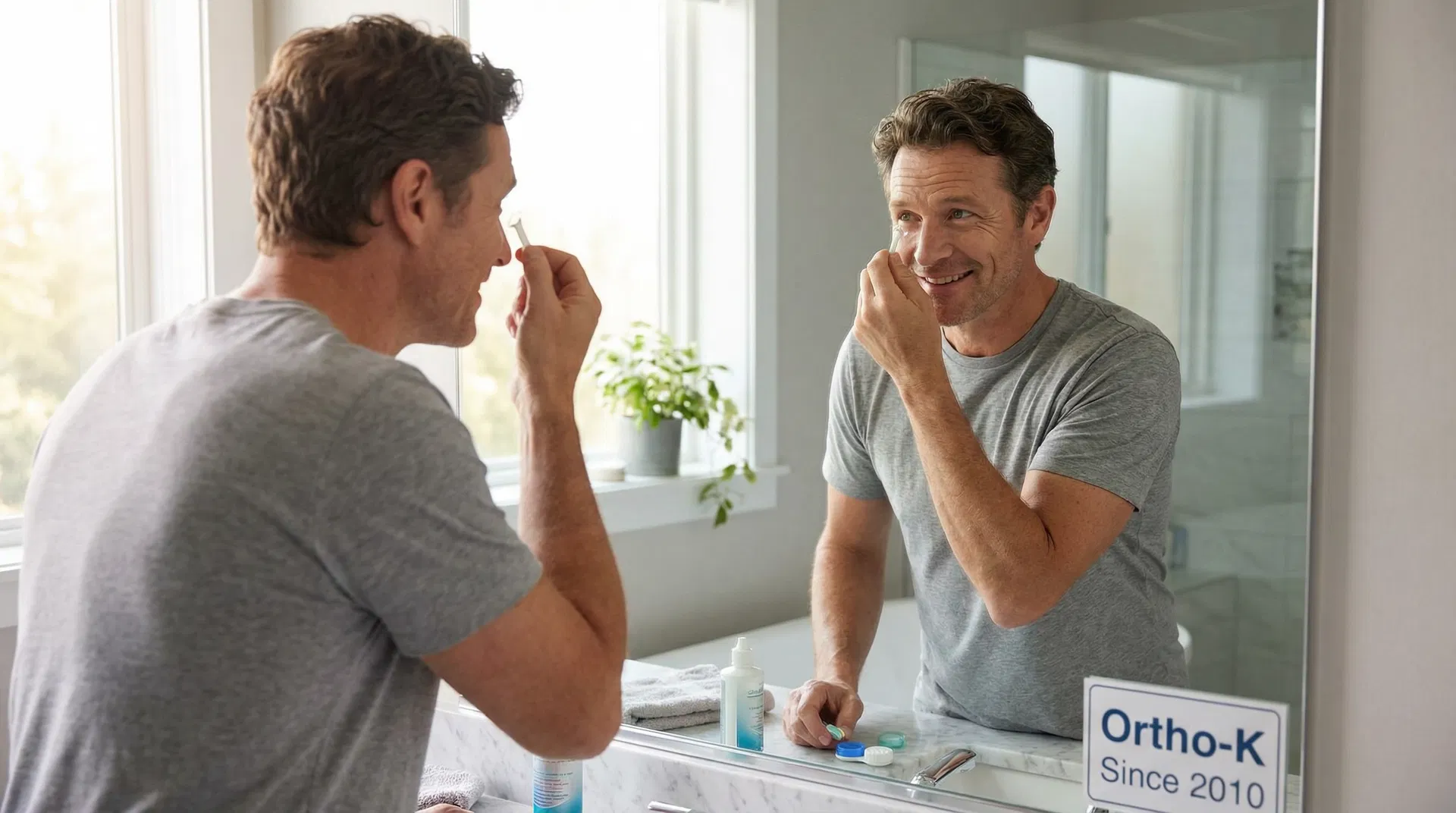
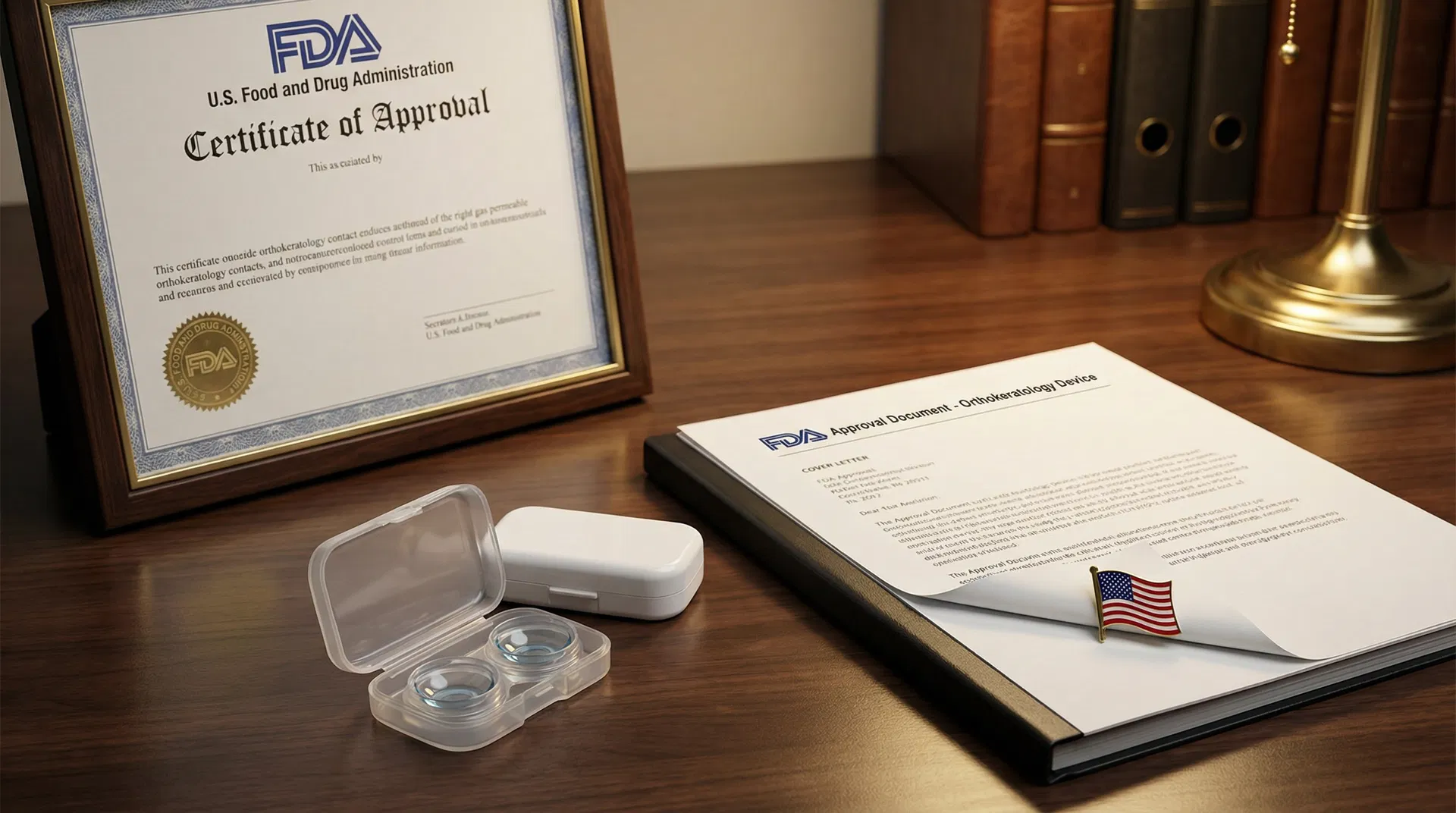
Lifestyle changes are a critical piece of the puzzle, but for many children, they aren’t enough to halt the progression of myopia. This is where modern myopia control comes in. At my practice, we specialize in sleepSEE®, a non-surgical, FDA-approved method that uses custom-designed ortho-k lenses to gently reshape the cornea overnight. Your child wears the lenses while they sleep and enjoys clear vision all day long without the need for glasses or daytime contacts.
But the real magic of sleepSEE® is how it controls myopia progression. Unlike regular glasses that just focus light on the central retina, our custom lenses create a specific peripheral defocus signal that tells the eye to stop growing. It’s a proactive approach that addresses the root cause of myopia.
When you combine these powerful lenses with healthy lifestyle habits—more outdoor time, better screen habits, proper near-work distances—you get the most effective protection possible. It’s not about choosing one or the other; it’s about creating a comprehensive strategy.
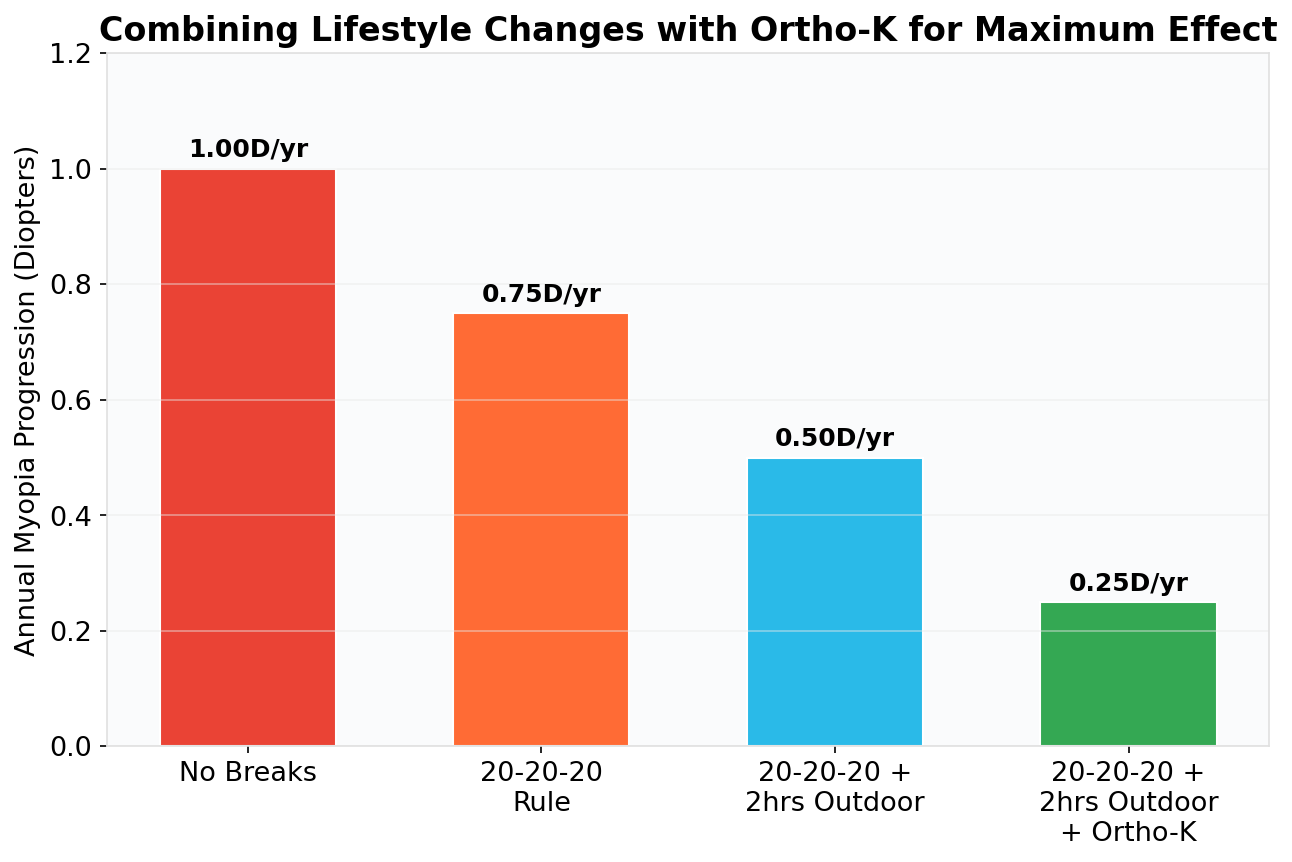
As this chart illustrates, while lifestyle changes and ortho-k are effective on their own, combining them provides the highest level of myopia control, significantly slowing down prescription changes.
Are you ready to see if your child is a candidate? Take our Candidacy Quiz [blocked] to get started. You can learn more about how it works [blocked] and explore other topics on our /blog [blocked].
It’s important for parents to know that sleepSEE® myopia control is a specialty service not covered by insurance. Flexible payment options and HSA/FSA funds are accepted. We believe every child deserves to see a future without the limitations of worsening myopia, and we’re committed to making it accessible for families in our community.
Frequently Asked Questions (FAQs)
1. Is it true that wearing glasses makes my child’s eyes worse?
This is a common myth. Standard glasses don’t make myopia worse, but they also don’t do anything to stop it from progressing. They simply correct the blurry vision. Myopia control methods like sleepSEE® are designed to do both: provide clear vision and slow down the underlying progression of the condition.
2. At what age can a child start myopia control?
We can start myopia control as soon as a child is diagnosed with myopia, often as young as 6 or 7. The earlier we start, the more we can slow down the progression and reduce the final prescription they end up with as an adult. The key is to be proactive.
3. How is sleepSEE® different from regular contact lenses?
Regular soft contact lenses are worn during the day to correct vision and are removed at night. sleepSEE® lenses are the opposite. They are rigid, gas-permeable lenses worn only at night to gently reshape the front surface of the eye. This provides clear vision during the day without any lenses and, most importantly, creates the optical effect needed for myopia control.
4. Where can I find a qualified provider?
Finding a provider experienced in myopia control is crucial. I am a Fellow of the International Academy of Orthokeratology and Myopia Control (FIAOMC), which means I have advanced training in this specialty. You can visit our Find a Provider [blocked] page to schedule a consultation at our Fayetteville office.
Protecting your child’s vision in this digital age requires a new way of thinking. It requires being informed, proactive, and consistent. By understanding the risks of excessive screen time and combining smart lifestyle choices with proven myopia control treatments like sleepSEE®, you can give your child the gift of clear, healthy vision for a lifetime.
Last reviewed: February 2026
Free Download: The Science Behind Ortho-K
A plain-language summary of 12 key clinical studies on orthokeratology efficacy.
- Summary of 12 peer-reviewed clinical studies
- Myopia progression rates with/without treatment
- Ortho-K vs. atropine vs. multifocal lenses
- FDA approval history and safety data
Ortho-K Research Summary
Science & Evidence — Free PDF
Dr. James Singletary, OD, FIAOMC
Dr. James Singletary, OD, FIAOMC is a contributor to the sleepSEE Insights blog, sharing expert knowledge on myopia progression, orthokeratology (Ortho-K) and myopia control.