As a dad and an optometrist here in Fayetteville, one of the most common questions I get from parents is, “Dr. Singletary, what’s the right age to start thinking about ortho-k for my child?” It’s a great question. You’re seeing your child’s vision get worse every year, and you’re wondering when you should… or even if you should, do something about it.
Here's the thing: there isn’t one single “magic” age. But there is a window of opportunity where we can make the biggest impact. Let me explain why that matters.
In This Article
- The Myopia Epidemic is Real, and It's Here in Cumberland County
- What is sleepSEE® Ortho-K?
- The "Sweet Spot" for Starting Ortho-K
- Is My Child a Candidate?
- What Happens if We Wait?
- A Note on Insurance
- Frequently Asked Questions
- The Takeaway
- More Than Just Vision Correction
- The sleepSEE® Experience in Fayetteville
The Myopia Epidemic is Real, and It's Here in Cumberland County
It seems like every other kid I see in my practice needs glasses. And it’s not just you. Nearsightedness, or myopia, is on the rise globally. A 2023 study published in Optometry and Vision Science found that by 2050, nearly half the world’s population could be myopic. That’s a staggering number.
Here in Fayetteville, I see it every day. We have a lot of families from Fort Liberty, and with all the screen time and intense schoolwork, our kids’ eyes are paying the price. It’s a real concern for parents, and rightly so.
But what if I told you that we can do more than just give your child stronger glasses every year? What if we could actually slow down the progression of their myopia? That’s where sleepSEE® comes in.
What is sleepSEE® Ortho-K?
sleepSEE® is our brand of orthokeratology, or ortho-k for short. It’s a non-surgical treatment that uses specially designed contact lenses to gently reshape the cornea overnight. Your child wears the lenses while they sleep and takes them out in the morning. The result? Clear vision all day long, without the need for glasses or daytime contacts.
But here’s the most important part: it’s not just about clear vision. It’s about myopia control. By reshaping the cornea, we can help slow down the elongation of the eyeball, which is the root cause of progressive myopia. It’s a proactive approach to your child’s eye health.
The "Sweet Spot" for Starting Ortho-K
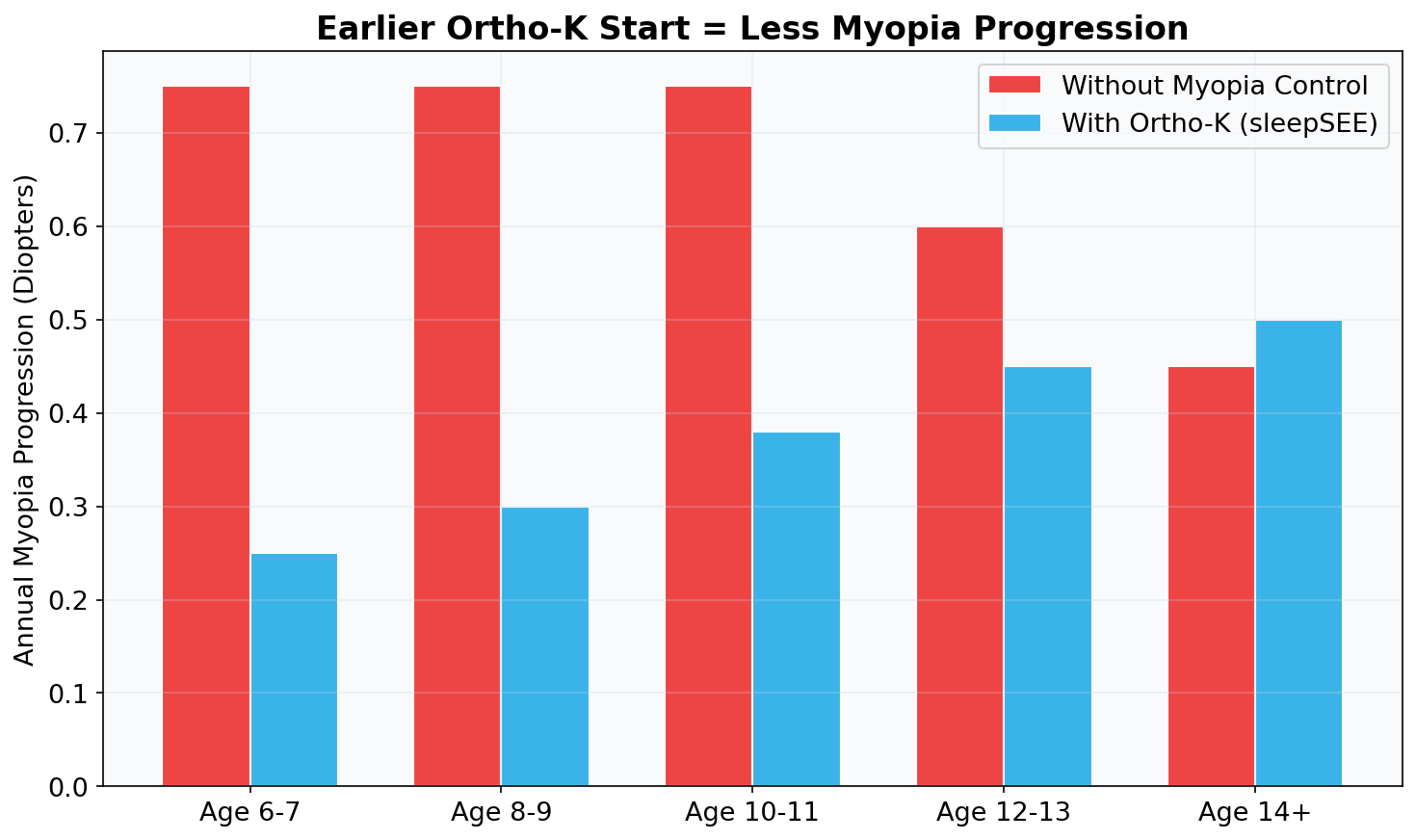
So, back to the original question: what’s the best age to start? While there’s no hard and fast rule, the general consensus is that the earlier we start, the better the outcome. Most eye care professionals agree that the ideal age to begin ortho-k is between 8 and 12 years old.
Why this age range? Because this is typically when we see the fastest progression of myopia. By starting treatment during these critical years, we can significantly slow down the rate at which their vision deteriorates. Think of it like this: the sooner we intervene, the more vision we can save.
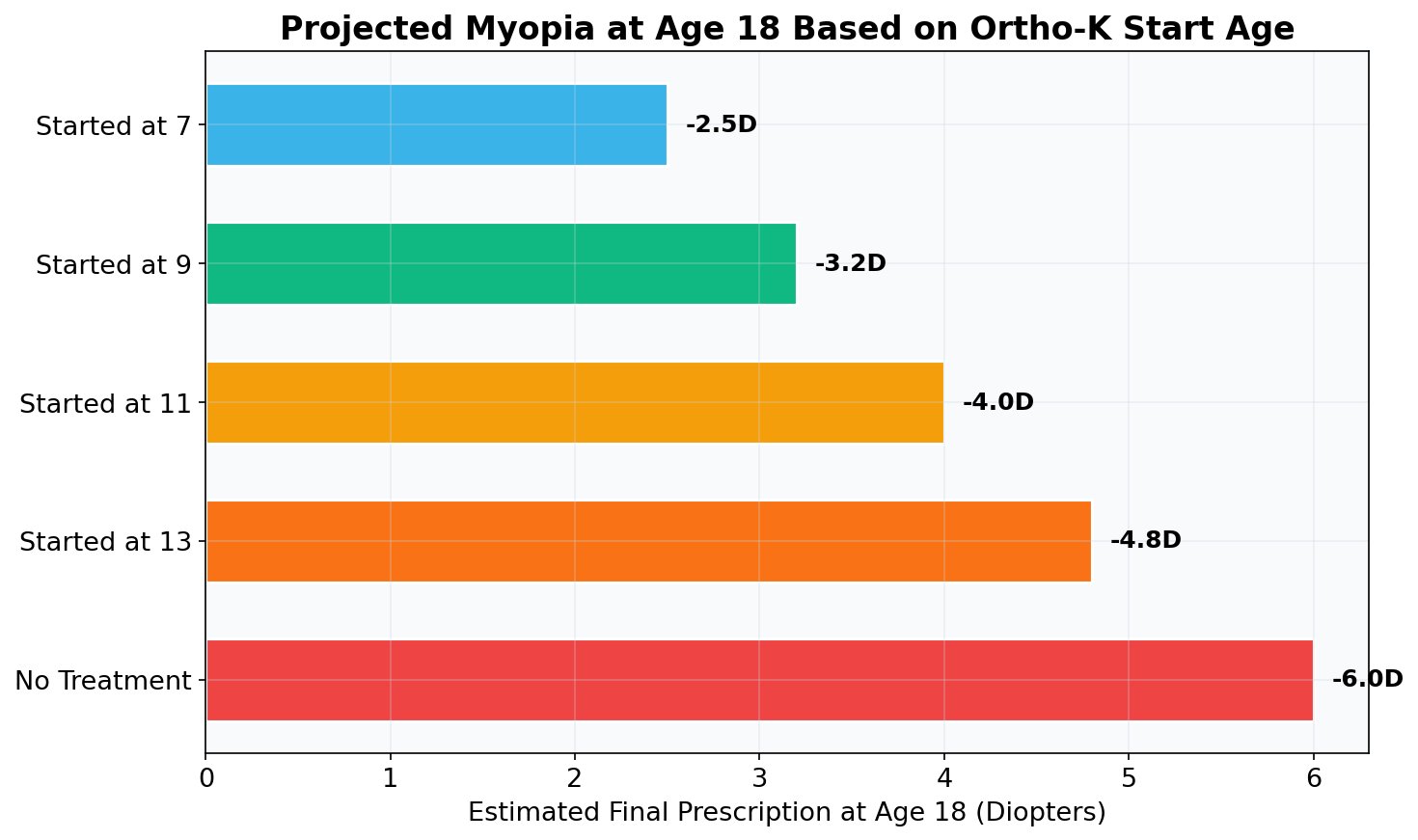
Here’s a chart that shows the potential outcomes based on when a child starts treatment:
As you can see, the children who started treatment at a younger age ended up with a much lower final prescription. That’s a big deal. A lower prescription means a lower risk of serious eye diseases later in life, like glaucoma, cataracts, and retinal detachment.
Is My Child a Candidate?
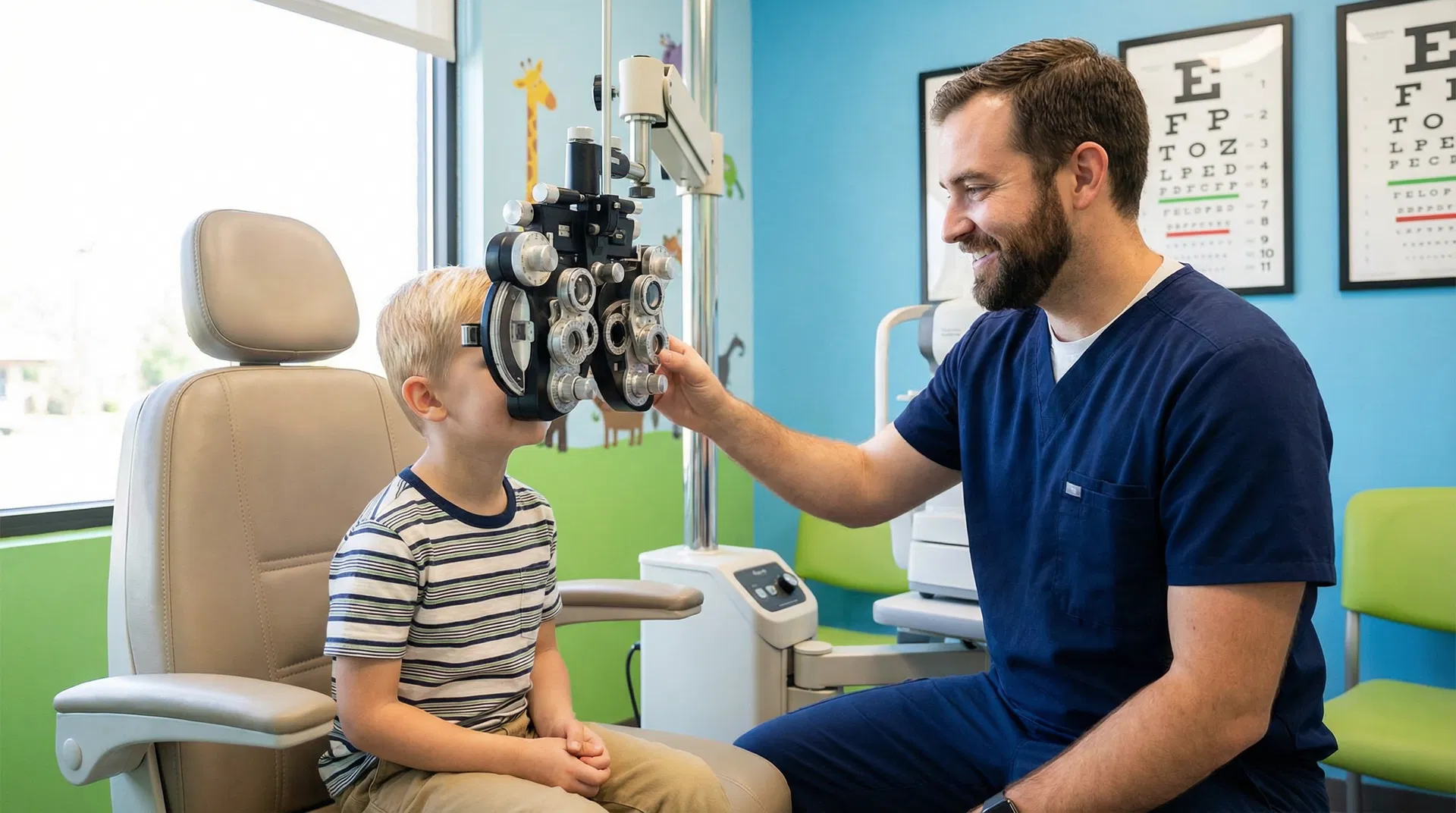
Of course, age is just one factor. We also need to consider your child’s prescription, their eye health, and their maturity level. The best way to find out if your child is a candidate for sleepSEE® is to schedule a consultation at our Fayetteville office. We’ll do a comprehensive eye exam and have a conversation about whether it’s the right fit for your family.
We have many young patients who handle their sleepSEE® lenses with ease. It’s all about proper training and building good habits. And the freedom of not having to wear glasses at school or for sports? That’s a huge confidence booster for a lot of kids.
What Happens if We Wait?
I get it. It can be tempting to wait. Maybe you think your child is too young, or you want to see if their prescription stabilizes on its own. But the reality is, with progressive myopia, waiting almost always means a higher final prescription. And that’s not a risk I’d be willing to take with my own kids.
This chart shows the projected prescription growth for a child with myopia who doesn’t receive any treatment:
The truth is, their eyes are going to keep growing. The question is, how much are we going to let them grow? With sleepSEE®, we have a tool to actively manage that growth and protect your child’s vision for the long term.
A Note on Insurance
I know the next question on your mind is probably about insurance. sleepSEE® myopia control is a specialty service not covered by insurance. This includes plans like TRICARE for our military families and local Blue Cross Blue Shield plans. However, we do offer flexible payment options, and you can use your HSA/FSA funds to pay for treatment. We believe that every child deserves the opportunity to have healthy vision, and we’ll work with you to make it affordable for your family.
Frequently Asked Questions
1. Is ortho-k safe for children?
Yes, ortho-k is a safe and effective treatment for myopia control in children. The risks are similar to those of any other type of contact lens wear, and we provide thorough training on proper hygiene and handling to minimize those risks.
2. How long does my child have to wear the lenses?
Ortho-k is a long-term treatment. Your child will need to wear the lenses every night to maintain the effect. We’ll continue to monitor their vision and eye health to ensure the treatment is working as it should.
3. What if my child plays sports?
Ortho-k is a great option for kids who play sports. They won’t have to worry about their glasses falling off or breaking, and they’ll have clear, natural vision on the field or court.
4. Can my child still wear glasses if they want to?
Yes, your child can still have a pair of glasses as a backup. However, the goal of ortho-k is to provide clear vision without the need for glasses or daytime contacts.
5. What happens when my child stops wearing the lenses?
If your child stops wearing their sleepSEE® lenses, their cornea will gradually return to its original shape, and their myopia will return. The myopia control effects, however, are lasting.
6. Where can I learn more?
You can read more about whether your child is a candidate for orthokeratology on our blog in our article, Is My Child a Candidate for Ortho-K? [blocked], or learn about what to expect during your first 30 days with sleepSEE in our article, Your First 30 Days with sleepSEE [blocked].
The Takeaway
When it comes to your child’s vision, the sooner you act, the better. If you’re concerned about your child’s worsening eyesight, don’t wait. Schedule a sleepSEE® consultation with us today. Let’s work together to give your child the gift of clear, healthy vision for a lifetime.
Author: Dr. James Singletary, OD, FIAOMC
Last reviewed: February 2026
References:
- American Academy of Ophthalmology. (n.d.). What Is Myopia? Retrieved from https://www.aao.org/eye-health/diseases/myopia-nearsightedness
- National Center for Biotechnology Information. (n.d.). PubMed Central. Retrieved from https://www.ncbi.nlm.nih.gov/pmc/
- A 2023 study published in Optometry and Vision Science.
More Than Just Vision Correction
It’s easy to think of sleepSEE® as just a way to get rid of glasses. And while that’s a huge benefit, it’s really only half the story. The other half, the more important half, is about your child’s long-term eye health. And that’s what I want to focus on for a minute.
You see, high myopia isn’t just an inconvenience. It’s a medical condition. The more nearsighted your child becomes, the more stretched and strained their eyeball is. This stretching process can lead to a whole host of serious, sight-threatening eye diseases later in life. We’re talking about things like:
- Retinal Detachment: This is a medical emergency where the retina, the light-sensitive tissue at the back of the eye, pulls away from its normal position. It can cause permanent vision loss if not treated immediately.
- Glaucoma: This is a group of eye conditions that damage the optic nerve, which is vital for good vision. It’s often called the “silent thief of sight” because it can progress without any symptoms until it’s too late.
- Cataracts: This is a clouding of the eye’s natural lens, which can make vision blurry and colors seem faded. While cataracts are a normal part of aging, high myopia can cause them to develop much earlier in life.
- Myopic Maculopathy: This is a condition that affects the macula, the central part of the retina responsible for sharp, detailed vision. It can lead to a gradual loss of central vision, making it difficult to read, drive, or recognize faces.
I don’t say this to scare you. I say this because it’s the reality of progressive myopia. And it’s why I’m so passionate about myopia control. By slowing down the progression of your child’s myopia now, we can significantly reduce their risk of developing these serious eye diseases in the future. It’s about setting them up for a lifetime of healthy vision.
The sleepSEE® Experience in Fayetteville
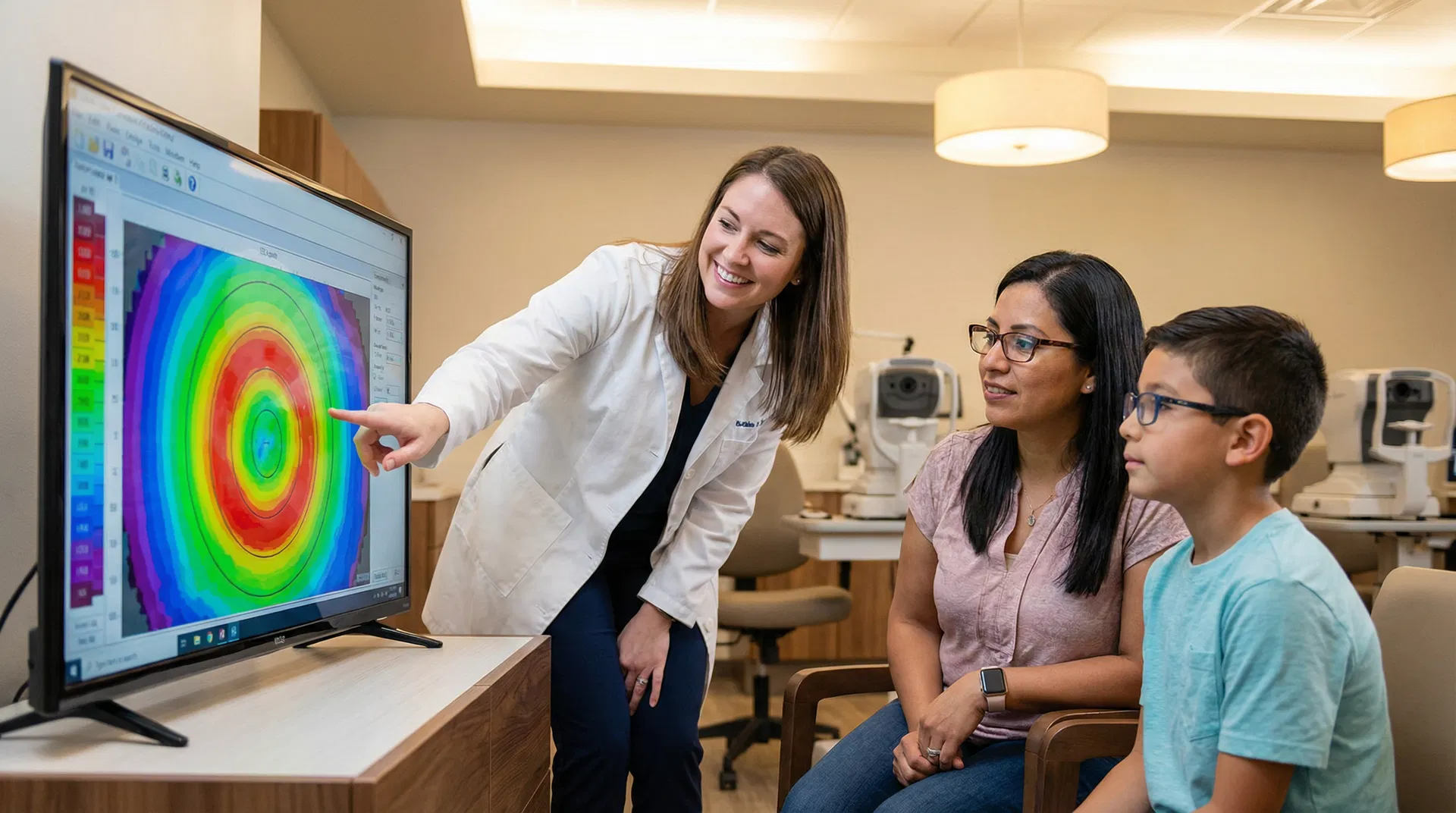
So, what does the sleepSEE® journey look like for a family here in Fayetteville? It all starts with a comprehensive consultation at our office. We’ll sit down and have a real conversation about your child’s vision, your concerns, and your goals. We’ll do a thorough eye exam, including a topography map of your child’s cornea. This map allows us to design a custom sleepSEE® lens that’s a perfect fit for your child’s unique eye shape.
Once the lenses are ready, we’ll have you and your child come in for a fitting and training session. We’ll teach you everything you need to know about inserting, removing, and caring for the lenses. We’ll make sure you both feel comfortable and confident before you leave. And we’ll be here to support you every step of the way.
We’ll see you for follow-up appointments to monitor your child’s progress and make any necessary adjustments. We’re not just giving you a product; we’re providing a service. We’re your partners in your child’s eye health journey. And we take that responsibility very seriously.
We’ve had the privilege of helping so many kids in our community achieve clear vision and slow down their myopia with sleepSEE®. We’ve seen their confidence soar as they’re able to participate in sports and activities without the hassle of glasses. We’ve seen the relief on their parents’ faces as they realize they’re doing something proactive to protect their child’s future vision. That’s what it’s all about for us.
Ortho-K by Age Group: What to Expect
How ortho-k candidacy, benefits, and outcomes vary by your child's age.
| Age Group | Myopia Control Benefit | Glasses-Free Benefit | Candidacy | Notes |
|---|---|---|---|---|
| Ages 6–8 | ★★★★★ Highest | Yes | Usually good | Ideal — catch early progression |
| Ages 9–12 | ★★★★☆ High | Yes | Good | Most common start age |
| Ages 13–17 | ★★★☆☆ Moderate | Yes | Good | Still effective, slower progression |
| Ages 18+ | ★★☆☆☆ Lower | Yes | Excellent | Primarily for glasses-free benefit |
Earlier intervention generally produces better myopia control outcomes. A comprehensive eye exam is required to determine candidacy.
Schedule a ConsultationFree Download: Myopia Risk Checklist for Parents
Is your child's vision at risk? Get the 10-point checklist used by ortho-k specialists.
- 10 warning signs myopia is progressing
- Questions to ask your eye doctor
- How to evaluate ortho-k candidacy
- What to expect in the first 30 days
Myopia Risk Checklist
For Parents — Free PDF Guide
sleepSEE Medical Advisory Board
sleepSEE Medical Advisory Board is a contributor to the sleepSEE Insights blog, sharing expert knowledge on myopia progression, orthokeratology (Ortho-K) and myopia control.