Hey there, I’m Dr. James Singletary, OD, FIAOMC. As an optometrist here in Fayetteville for over 15 years, I’ve had the privilege of caring for the eyes of so many kids in our community. From toddlers getting their first pair of glasses to high schoolers getting ready for college, I’ve seen it all. And I’ve had countless conversations with parents, many of them anxious about their child’s vision. It’s a conversation I have almost every single day. A mom or dad, worried because they’ve noticed their child squinting, or a teacher calls to say their student is having trouble seeing the board. It’s a common story, and it’s one that I’m on a mission to change, one family at a time.
Here's the thing: nearsightedness, or myopia, is so much more than just a simple vision problem that can be fixed with a pair of glasses. It’s a progressive condition, a genuine epidemic, and it’s putting our kids at a higher risk for serious, sight-threatening eye diseases down the road. But how can you, as a parent, know if your child is developing myopia? What are the subtle clues you should be looking for? Let me break it down for you, parent to parent.
In This Article
- 1. Squinting to See Distant Objects
- 2. Sitting Too Close to the TV or Holding Devices Close
- 3. Frequent Headaches or Eye Strain
- 4. A Sudden Drop in Grades
- 5. A Family History of Nearsightedness
- What to Do if You Notice These Signs
- The Childhood Myopia Epidemic is Real, and It’s Here in Fayetteville
- Frequently Asked Questions
- Take Control of Your Child's Vision and Their Future
1. Squinting to See Distant Objects
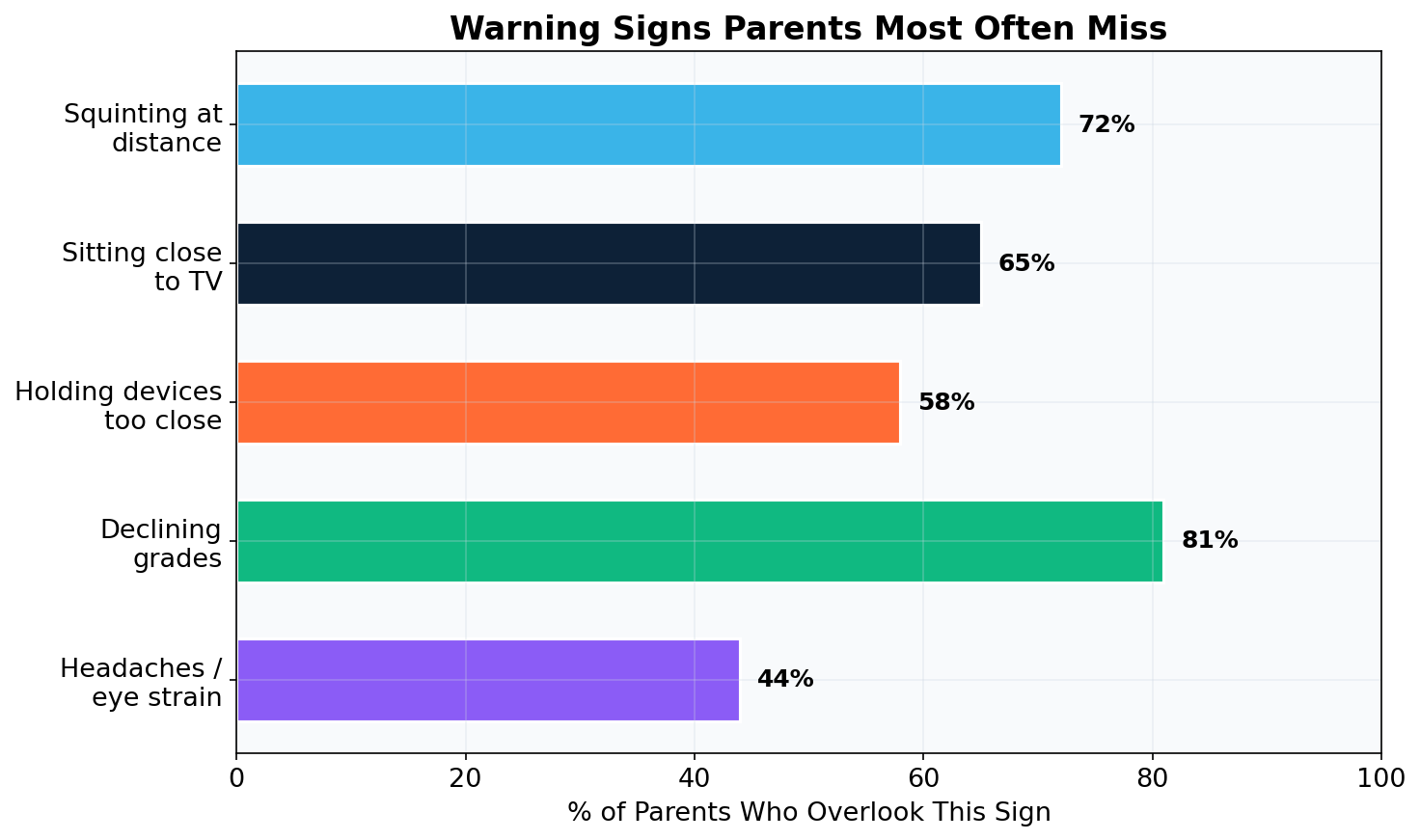
Have you ever been driving and noticed your child in the backseat, squinting to read a road sign? Or maybe you’ve seen them at the park, squinting to see a friend across the field. It might seem like a small thing, but it’s a big deal. Squinting is a natural reflex; it’s the eye’s way of trying to create a pinhole effect to focus light more clearly on the retina. But if you’re seeing it happen consistently, it’s one of the most common red flags for myopia.
I remember a young patient I saw a few months ago, a bright 8-year-old girl. Her mom brought her in because her teacher had noticed she was squinting at the board. During the exam, I discovered she had a significant amount of myopia. After we fitted her with her sleepSEE lenses, her mom told me that she had no idea how much her daughter had been struggling. The little girl was so excited to be able to see the leaves on the trees clearly for the first time. It’s moments like that that remind me why I do what I do.
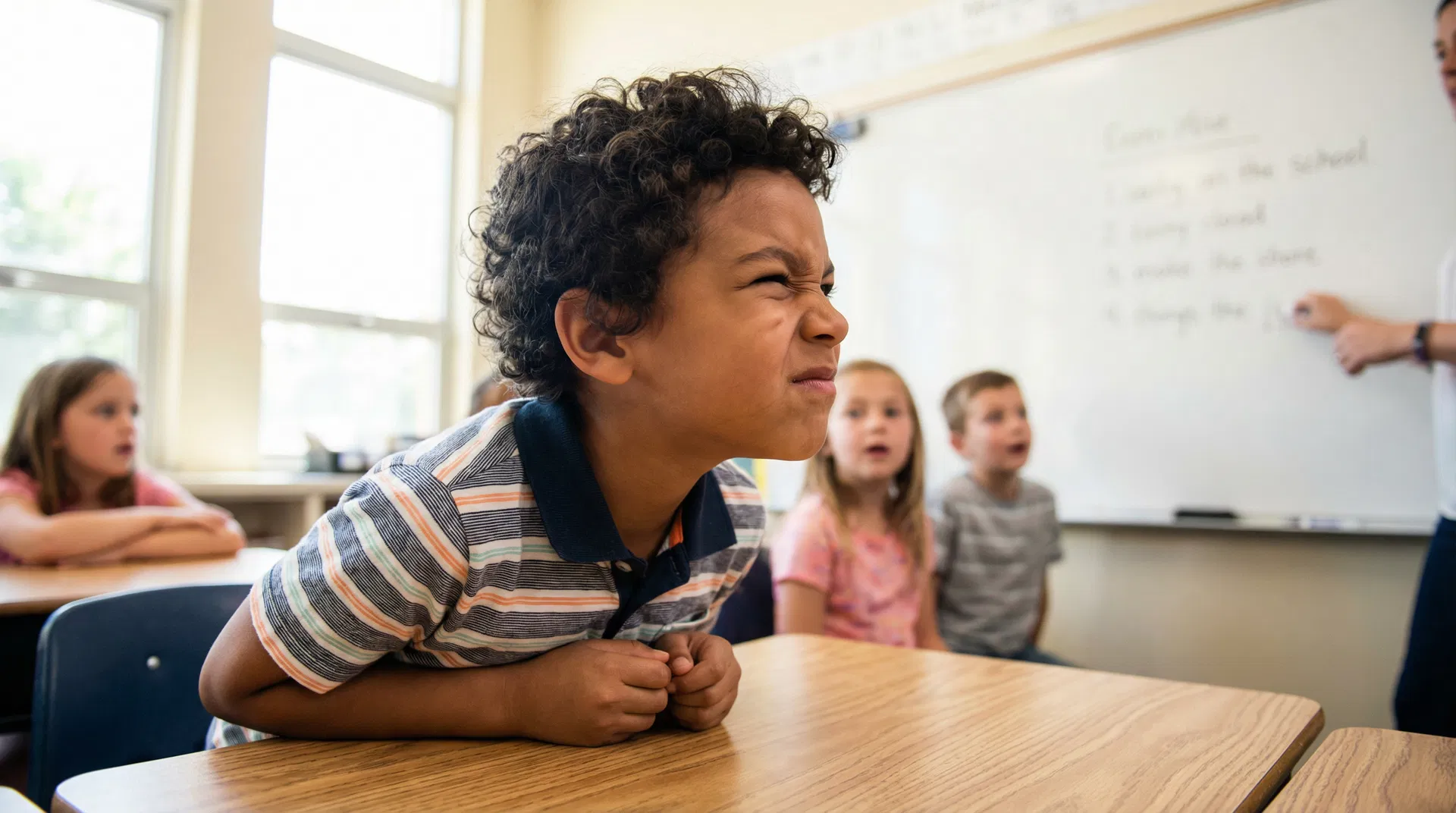
Think of it like this: when a child has myopia, their eyeball is slightly elongated, a little more oval than round. This change in shape causes the light entering the eye to focus in front of the retina, instead of directly on it. The result? Blurry distance vision. Squinting is their unconscious attempt to compensate for this blur.
2. Sitting Too Close to the TV or Holding Devices Close
It’s a classic image, isn’t it? The kid with their nose practically touching the TV screen. We’ve all seen it. While it might seem like a harmless, quirky habit, it can be another tell-tale sign of myopia. If your child is consistently moving closer to see things, whether it’s the TV, a book, or a tablet, it’s because their distance vision is blurry. They’re trying to make the image appear larger and clearer, to bring it into their limited range of clear focus.
With so many of our kids in Cumberland County schools now using digital devices like tablets and laptops for their schoolwork, this is a trend I’m seeing more and more in my practice. It’s not just about the amount of screen time, although that is a factor. It’s about the proximity. The closer they hold the device, the harder their eyes have to work. This can not only be a sign of existing myopia but can also contribute to its progression.
3. Frequent Headaches or Eye Strain
Myopia can be a real headache. Literally. When your child’s eyes are constantly straining to focus on distant objects, the tiny muscles in their eyes become overworked. This constant effort can lead to tension headaches, eye fatigue, and a general feeling of discomfort. They might complain that their eyes feel tired, sore, or achy, especially after a long day at school or after doing homework.
These are symptoms that are all too easy to dismiss as just being tired. But they can be a clear indication that your child’s visual system is under stress. It’s their body’s way of telling them that something is wrong. Don’t ignore these complaints. They are often the first signs of an underlying vision problem.
4. A Sudden Drop in Grades
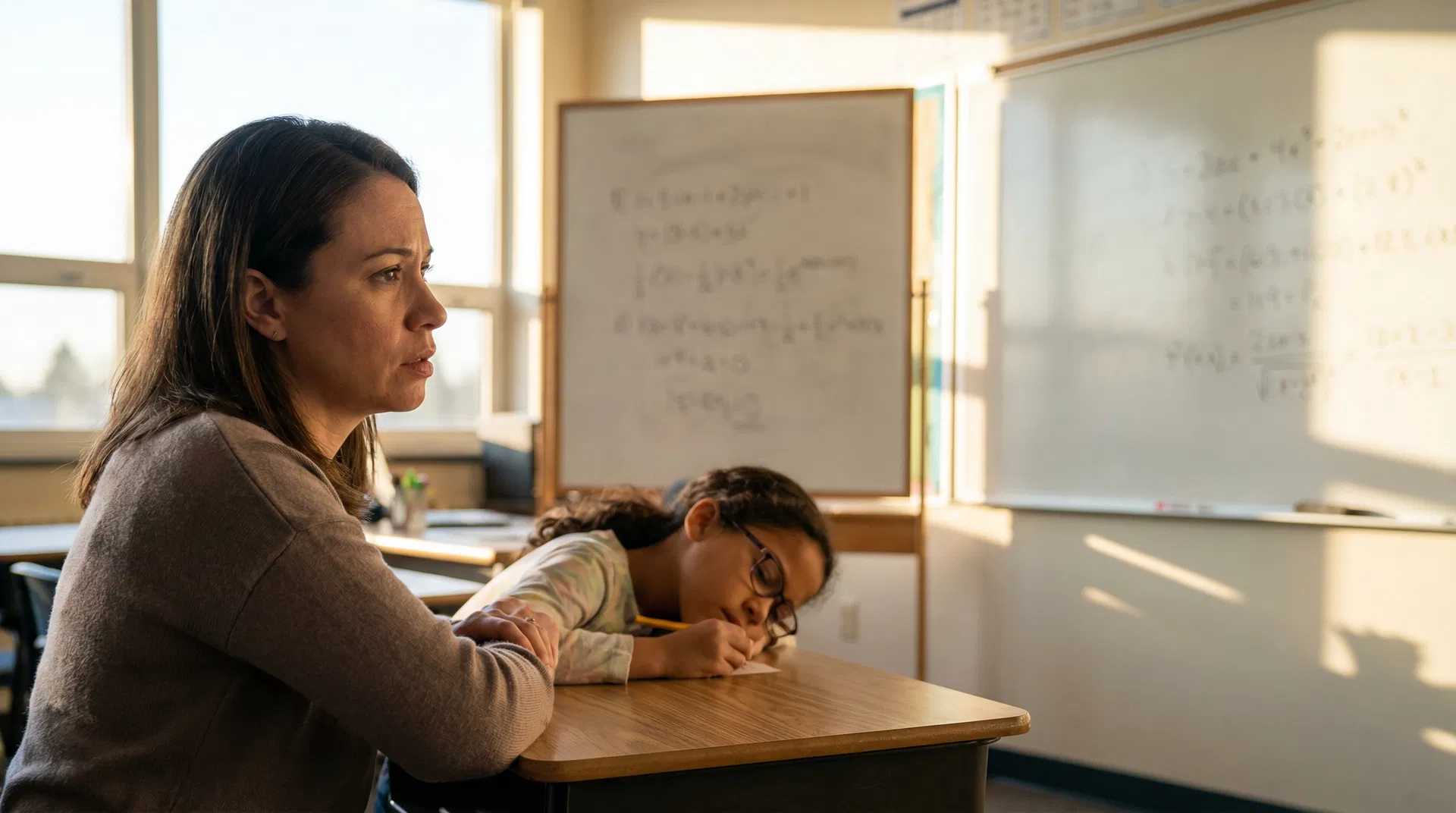
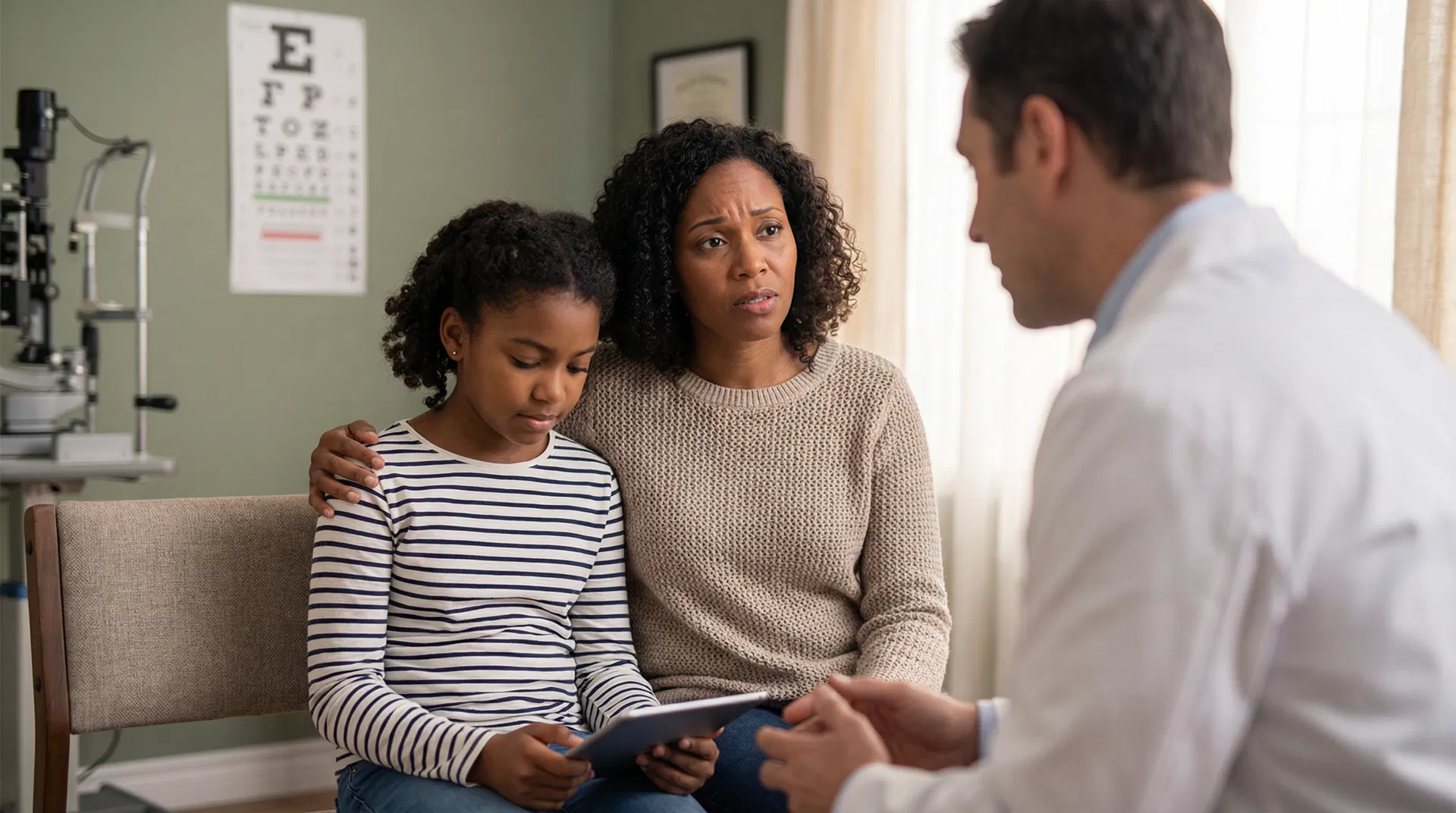
If your bright, engaged child suddenly starts struggling in school, it might not be a lack of effort or understanding. It could be that they simply can’t see. Imagine trying to learn algebra when you can’t even read the equations on the board. It’s an impossible task. A sudden drop in grades is a huge red flag that should prompt an immediate visit to the eye doctor.
I’ve had so many parents come into my office, completely baffled by their child’s declining school performance. They’ve tried tutors, extra help, everything they can think of. And then, we discover the root of the problem: uncorrected myopia. It’s a simple, but often overlooked, connection. That’s why I’m such a huge advocate for regular, comprehensive eye exams. We can catch these problems early, before they start to impact your child’s academic success and, just as importantly, their self-esteem.
5. A Family History of Nearsightedness
Genetics play a significant role in myopia. If you or your spouse are nearsighted, there’s a much higher probability that your child will be too. In fact, a 2023 study published in the prestigious journal Optometry and Vision Science found that children with two myopic parents are more than three times as likely to develop myopia themselves. It’s a powerful genetic link.
This doesn’t mean that your child is destined to wear glasses for the rest of their life. But it does mean that we need to be extra vigilant. Proactive screening and early intervention are absolutely key. Think of it like any other inherited health condition. If you have a family history of heart disease, you take steps to protect your heart. The same should be true for your child’s vision.
What to Do if You Notice These Signs
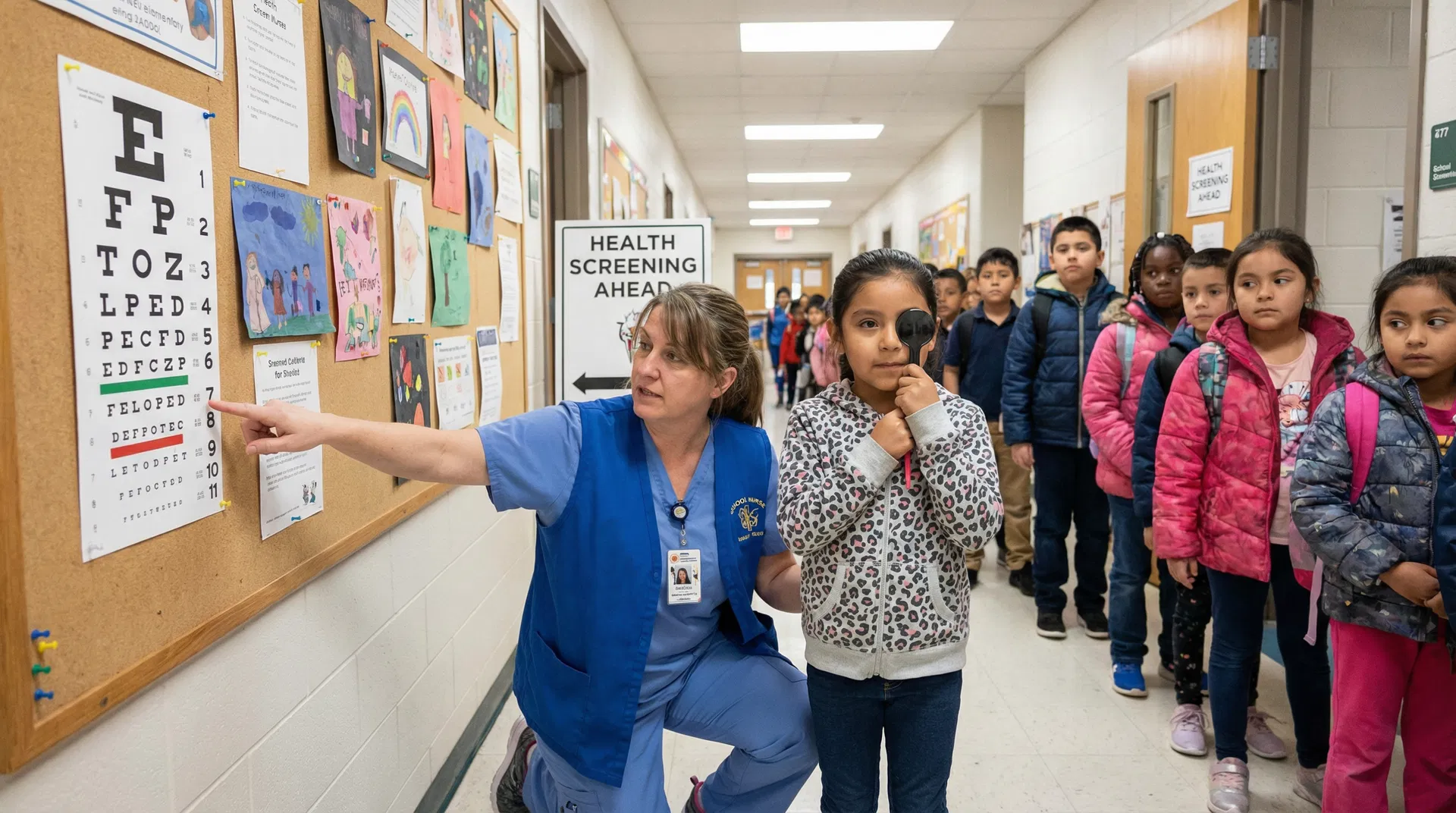
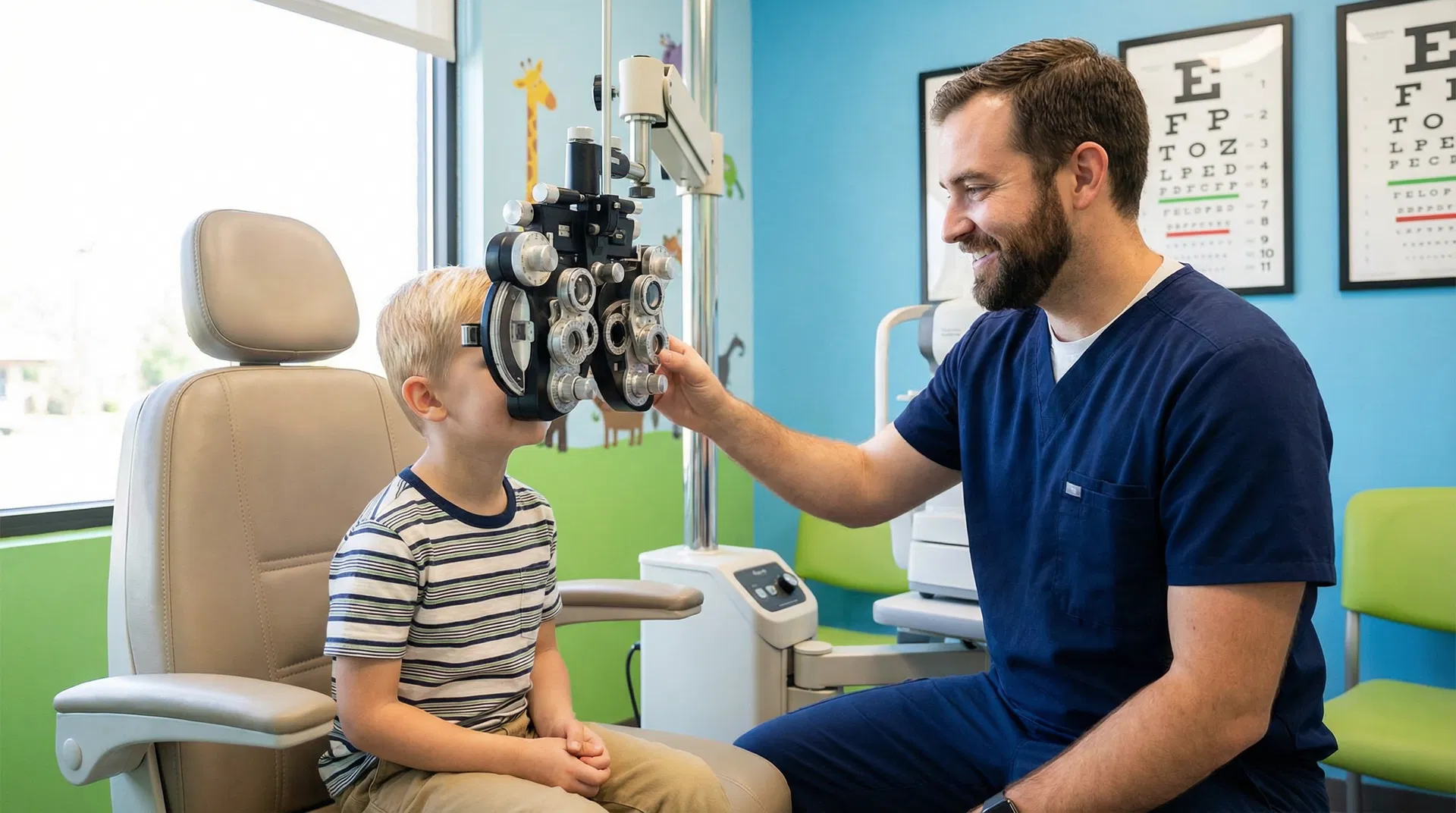
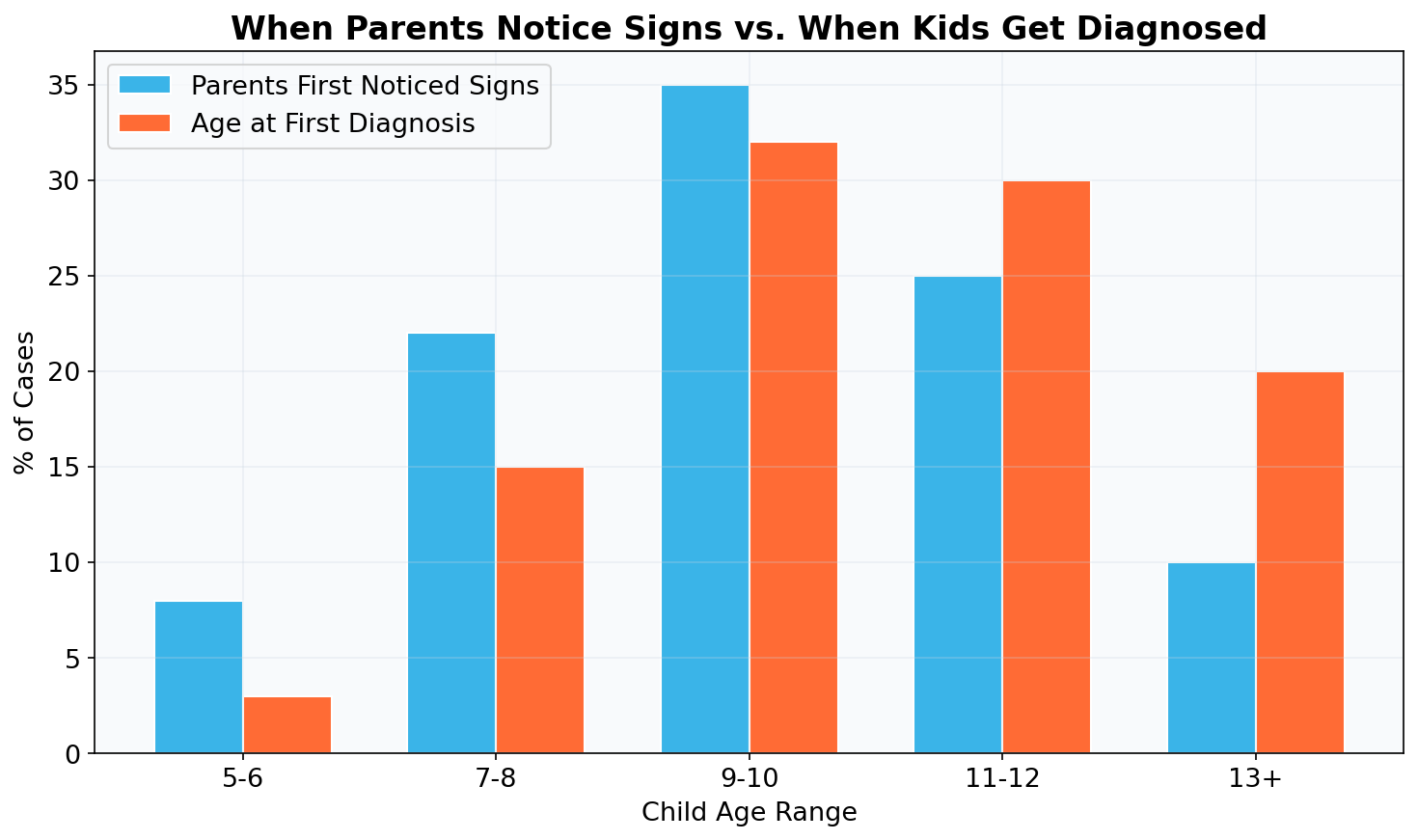
If you’ve noticed any of these warning signs in your child, the very first step is to schedule a comprehensive eye exam. And I don’t mean the quick vision screening at the pediatrician’s office or the school nurse. I mean a thorough, in-depth exam with an optometrist who specializes in children’s vision and myopia control.
Here at my practice in Fayetteville, we’ve dedicated ourselves to being leaders in myopia control. We offer a revolutionary, FDA-approved treatment called sleepSEE®. It’s a non-surgical method that uses specially designed lenses, worn overnight, to gently reshape the cornea and correct vision. It’s a game-changer for kids, and it’s something I am incredibly passionate about because I’ve seen the life-changing results firsthand.
sleepSEE® myopia control is a specialty service and is not covered by vision or medical insurance. However, we offer flexible payment options and you can use your HSA/FSA funds to pay for treatment. If you’re interested in learning more, a great place to start is by reading about whether your child is a candidate for orthokeratology on our blog: /blog/is-my-child-a-candidate-for-orthokeratology [blocked].
The Childhood Myopia Epidemic is Real, and It’s Here in Fayetteville
The number of children with myopia is exploding. It’s a global public health crisis, and it’s something we need to take very seriously. The World Health Organization has predicted that by the year 2050, a staggering half of the world’s population will be myopic. That’s billions of people.
Why does this matter so much? Because high myopia isn’t a benign condition. It’s a major risk factor for developing serious, sight-threatening eye diseases later in life, such as retinal detachment, glaucoma, cataracts, and myopic maculopathy. The good news is, we can do something about it. We can be proactive. To learn more about this growing issue, I encourage you to read our article on the /blog/childhood-myopia-epidemic [blocked].
Frequently Asked Questions
1. At what age should my child have their first eye exam?
The American Optometric Association (AOA) recommends a timeline for pediatric eye exams. The first comprehensive exam should be at 6 months of age, then again at 3 years, and just before they start first grade, around age 5 or 6. After that, an annual exam is recommended.
2. Is myopia control safe for children?
Absolutely. When administered by a qualified and experienced optometrist, myopia control treatments like our sleepSEE® program are both safe and effective for children and adolescents.
3. Can’t I just get my child a stronger pair of glasses every year?
While a new pair of glasses will certainly correct your child’s blurry vision, it does absolutely nothing to slow down the progression of their myopia. Their prescription will continue to get stronger, and their risk of future eye disease will continue to increase. That’s why a proactive approach with myopia control is so critically important.
4. What is the difference between Myopia Control and Myopia Management?
You’ll hear both terms used, and they are often used interchangeably. However, here at our practice, we prefer the term "Myopia Control." We feel it more accurately describes our proactive, aggressive approach. We’re not just managing a condition; we are actively working to control the progression of myopia and protect your child’s future vision.
5. My child is very active in sports. Can they still participate in myopia control?
Yes! In fact, sleepSEE® is an absolutely fantastic option for active kids. Since the lenses are worn only at night while they sleep, your child will have crisp, clear vision all day long, without the hassle or worry of glasses or daytime contact lenses getting in the way of their game.
6. We are a military family stationed at Fort Liberty and have TRICARE. How does that work with your services?
First of all, thank you for your service. We are honored to care for so many military families from Fort Liberty. While sleepSEE® is a specialty service and not covered by TRICARE or most other insurance plans like Blue Cross, we can certainly help you understand all of your options and how to best utilize your benefits, including your FSA or HSA accounts.
Take Control of Your Child's Vision and Their Future
As a parent, you want nothing more than what is best for your child. You want them to be healthy, happy, and successful. And that includes protecting their precious gift of sight. If you’re concerned about your child’s eyes, please don’t wait. Don’t dismiss those little signs. Schedule an eye exam today. Let’s work together as a team to give your child the gift of clear vision for a lifetime.
Author: Dr. James Singletary, OD, FIAOMC
Last reviewed: February 2026
References
- Myopia (Nearsightedness). National Eye Institute.
- What Is Myopia? American Academy of Ophthalmology.
- Interventions to slow progression of myopia in children. PubMed Central.
- Donovan, L., Sankaridurg, P., Ho, A., Naduvilath, T., Smith, E. L., 3rd, & Frick, K. D. (2023). Myopia progression and management. Optometry and Vision Science, 100(1), 1-15.
Free Download: Myopia Risk Checklist for Parents
Is your child's vision at risk? Get the 10-point checklist used by ortho-k specialists.
- 10 warning signs myopia is progressing
- Questions to ask your eye doctor
- How to evaluate ortho-k candidacy
- What to expect in the first 30 days
Myopia Risk Checklist
For Parents — Free PDF Guide
Dr. James Singletary, OD, FIAOMC
Dr. James Singletary, OD, FIAOMC is a contributor to the sleepSEE Insights blog, sharing expert knowledge on myopia progression, orthokeratology (Ortho-K) and myopia control.